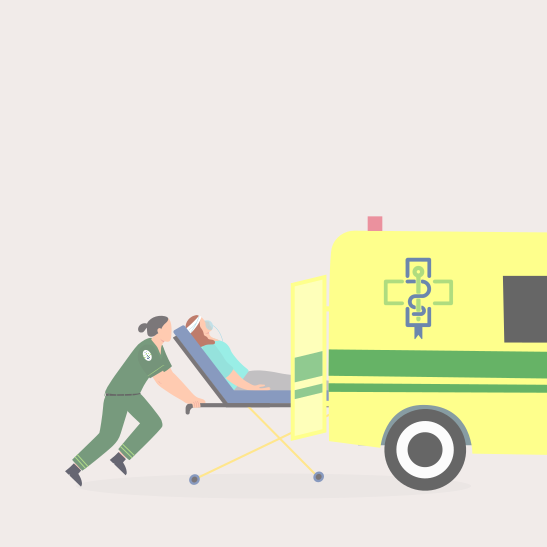
Prehospital Moving and Handling
Safe patient movement and handling in the prehospital setting
Prehospital moving and handling is a fundamental aspect of patient care, ensuring patients are moved safely while minimising the risk of injury to both patients and clinicians. In the out-of-hospital environment, clinicians often work in confined spaces, unpredictable conditions, and time-critical situations where safe handling principles are essential.
This resource explores the principles of prehospital moving and handling, including risk assessment, manual handling techniques, use of equipment, team communication, and decision-making for complex or bariatric patients. Designed for paramedics, EMTs, ECAs, and first responders, it supports safe practice, patient dignity, and clinician wellbeing throughout extrication and transport.
Prehospital Moving and Handling – Articles
Prehospital Moving and Handling – Resources
🔗 Health and Safety Executive (HSE)
UK guidance on safe moving and handling, including risk assessment, manual handling principles, and use of equipment to reduce injury risk to patients and clinicians in challenging environments.
📥Coming Soon
📖 Coming Soon

Prehospital Moving and Handling – Did You Know?
Poor moving and handling is a leading cause of clinician injury
Manual handling injuries are one of the most common causes of musculoskeletal problems in prehospital clinicians. Using correct technique, equipment, and team coordination significantly reduces long-term injury risk.
Patient movement can worsen injuries if not planned
Unnecessary movement or poor alignment can exacerbate fractures, spinal injuries, and soft tissue damage. A brief pause to plan movement often improves both patient safety and efficiency.
Positioning is a powerful clinical intervention
Simple changes in patient position can improve comfort, reduce pain, support airway and breathing, and limit further injury — especially in trauma or respiratory distress.
Bariatric patients require a different approach
Bariatric moving and handling increases risk to both patients and clinicians. Early recognition, appropriate equipment, and requesting additional resources are key to safe and dignified care.
Good communication reduces physical effort
Clear leadership, agreed commands, and shared understanding of the plan reduce sudden movements, awkward loads, and unnecessary strain during lifts and transfers.
Prehospital Moving and Handling – CPD Reflection Prompts
Reflective practice is a key part of continuing professional development (CPD) and clinical improvement. Use these prompts below to guide your self-reflection on a recent moving and handling intervention.
Reflect on a recent prehospital moving and handling scenario, such as patient repositioning, extrication, lifting, carry techniques, or bariatric patient movement:
- jWhat went well during your initial risk assessment and movement planning?
- jHow effective was your choice of technique and equipment for the patient’s condition and environment?
- jHow did your positioning of the patient support comfort, injury management, and ongoing clinical care?
- jWhat challenges did you encounter during the move (e.g. space constraints, terrain, patient size, time pressure)?
- jHow did patient factors such as pain, reduced mobility, trauma, obesity, or anxiety influence your approach?
- jHow did communication, leadership, and team coordination affect the safety and efficiency of the move?
asdadasd
Consider writing this reflection in your CPD portfolio or ePortfolio using the Gibbs Reflective Cycle or What? So What? Now What? framework. This reflective exercise not only enhances clinical self-awareness but also provides documented evidence of learning that can count towards your annual HCPC CPD requirements. Keeping detailed, structured reflections like this is essential for maintaining your registration and demonstrating safe, effective, and reflective practice as a healthcare professional. This can count toward your annual HCPC CPD requirements.
Prehospital Moving and Handling Procedures – FAQs
Frequently Asked Questions about Prehospital Moving & Handling in Paramedic Practice
What are prehospital moving and handling procedures?
Prehospital moving and handling procedures refer to the techniques and principles used to safely move, lift, reposition, or extricate patients in the prehospital environment. These include patient repositioning, manual handling techniques, use of carrying aids, extrication devices, stretchers, and bariatric equipment, with the aim of protecting both patient safety and clinician wellbeing.
Why is risk assessment important before moving a patient?
A structured risk assessment helps identify hazards such as limited space, uneven terrain, patient weight, injury patterns, and available resources. Effective planning reduces the risk of harm to the patient and minimises the likelihood of musculoskeletal injury to clinicians.
Is minimal movement always best in trauma patients?
Not always. While unnecessary movement should be avoided, timely and controlled movement may be required to manage life-threatening conditions, extricate a patient from danger, or facilitate transport. Decisions should balance spinal protection with the need for rapid intervention and scene safety.
How does communication improve moving and handling safety?
Clear communication ensures all team members understand the plan, their roles, and the timing of movements. Effective leadership and coordinated commands reduce sudden or unplanned movements, lowering the risk of patient discomfort and staff injury.
What considerations are important when managing bariatric patients?
Bariatric patient handling requires early recognition, appropriate equipment, additional personnel, and realistic planning. Poor preparation increases the risk of patient harm, equipment failure, and staff injury. Escalation for specialist resources should occur early where needed.