Communicating Difficult Circumstances
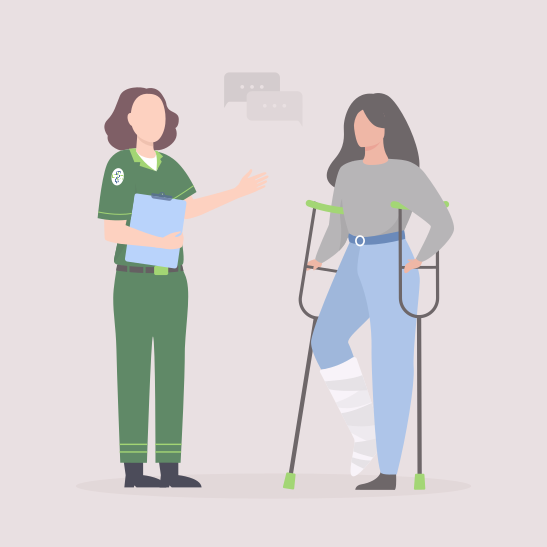
Supporting patients, families, and colleagues through challenging conversations in prehospital careEffective communication is a critical clinical skill in prehospital care, particularly when delivering difficult information, managing emotional situations, or supporting patients, relatives, and colleagues during distressing circumstances. Prehospital professionals are often required to communicate clearly, compassionately, and professionally in time-critical, unpredictable environments where emotions run high and information may be limited.
This resource explores key principles of communicating difficult circumstances in the prehospital setting, including breaking bad news, managing conflict, supporting distressed patients and families, and maintaining professionalism under pressure. It supports reflective practice, patient-centred care, and effective teamwork in complex and emotionally challenging situations.
Communicating Difficult Circumstances Articles
Communicating Difficult Circumstances Resources
🔗 How good communication skills benefit patients – NHS.UK
The article from NHS England’s Cancer Communications Resource Hub explains how good communication skills in healthcare benefit patients, service users, and people affected by cancer. It highlights the importance of clear, compassionate communication in improving patient outcomes, emotional well-being, and shared decision-making, while also supporting NHS values and health literacy initiatives.
📥 Prehospital Communication Guide
A free communication guide for patients that have communication difficulties designed for use in the prehospital setting.
📖 Coming Soon

Communicating Difficult Circumstances – Did You Know?
Poor communication is a leading cause of clinical errors
Breakdowns in communication are a major contributor to patient harm. Using structured handover tools and closed-loop communication can significantly improve safety.
Structured handovers improve patient outcomes
Tools like SBAR and ATMIST help ensure key clinical information is conveyed clearly and concisely, reducing the risk of important details being missed during transitions of care.
Non-verbal communication plays a key role in patient interaction
Body language, tone of voice, and facial expressions can greatly affect how patients and relatives perceive care and can help build trust in stressful situations.
Communication with relatives can influence patient experience
Engaging with family members compassionately, explaining interventions, and managing expectations are key elements of holistic prehospital care.
Communicating Difficult Circumstances – CPD Reflection Prompts
Reflective practice is a key part of continuing professional development (CPD) and clinical improvement. Use these prompts below to guide your self-reflection on a recent patient assessment.
Reflect on a recent patient encounter where effective communication made a positive difference — or where communication challenges impacted care.
-
jHow did you communicate with the patient and their family?
asdadasd
-
jWhat could you improve in your communication practice to enhance patient safety and team performance in future situations?
asdadasd
-
jDid you face any barriers due to the environment, patient condition, language barrier?
asdadasd
-
jIf presented with a similar case in future, what would you do differently—or the same?
asdadasd
Consider writing this reflection in your CPD portfolio or ePortfolio using the Gibbs Reflective Cycle or What? So What? Now What? framework. This reflective exercise not only enhances clinical self-awareness but also provides documented evidence of learning that can count towards your annual HCPC CPD requirements. Keeping detailed, structured reflections like this is essential for maintaining your registration and demonstrating safe, effective, and reflective practice as a healthcare professional. This can count toward your annual HCPC CPD requirements.
Communicating Difficult Circumstances – FAQs
Frequently Asked Questions about Prehospital Communication in Paramedic Practice
What is structured handover in prehospital care?
Structured handover involves using tools such as SBAR (situation, background, assessment, recommendation) or ATMIST to communicate key patient information clearly and consistently during transitions of care.
Why is effective communication important in prehospital care?
Clear communication reduces the risk of errors, ensures vital information is passed on accurately, supports teamwork, and improves patient safety and experience.
How can paramedics improve communication with patients?
Using plain language, active listening, empathy, and appropriate non-verbal cues helps build trust and understanding, particularly in stressful or unfamiliar situations.
How can communication with relatives be managed in emergency situations?
Communicating calmly, providing clear explanations, and acknowledging relatives’ emotions can help reduce anxiety and maintain trust, even in challenging circumstances.